
German Courses for Professionals in Germany
A quicker way to reach your goals
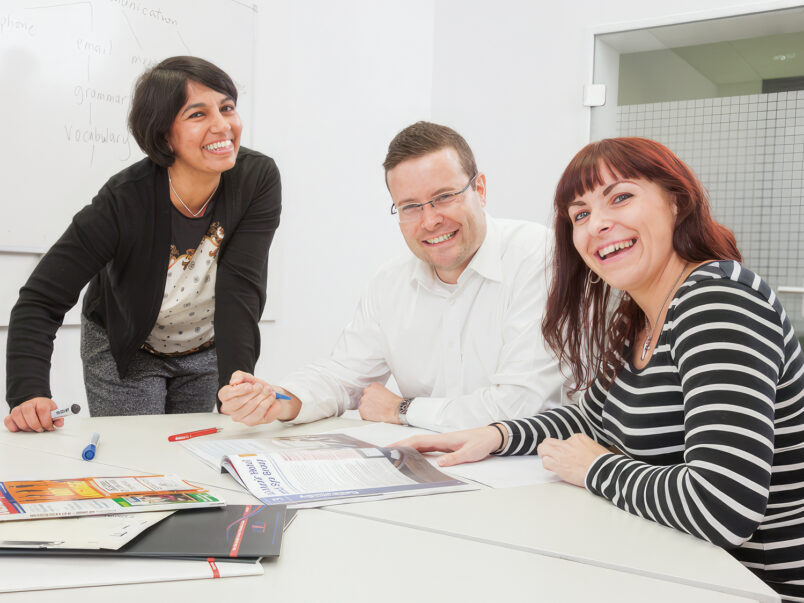
As expatriates they will usually speak English, either as their mother tongue or as a second language. Rather than conducting the German courses in the target language alone, we make use of this common knowledge of English to speed up the learning process.
All the trainers involved in the German Courses for Professionals Programme are German native speakers with an excellent command of the English language.
Thus grammar rules, structures and vocabulary can be explained directly and understandably.
In other words it is a question of “as much English as necessary, as much German as possible.”
As the learner progresses reduced step by step. For the learner this means the achievement of specified goals in the shortest time possible.
The relaxed atmosphere and our special Stevens approach complete the picture. Apart from the linguistic content our trainers also include aspects of culture and life-style in their courses. Such items give the learner a better orientation, and reinforce self-confidence in social and business situations.
For a better understanding – Speak the language, know the people
German language courses at an English language institute? Yes it makes sense!
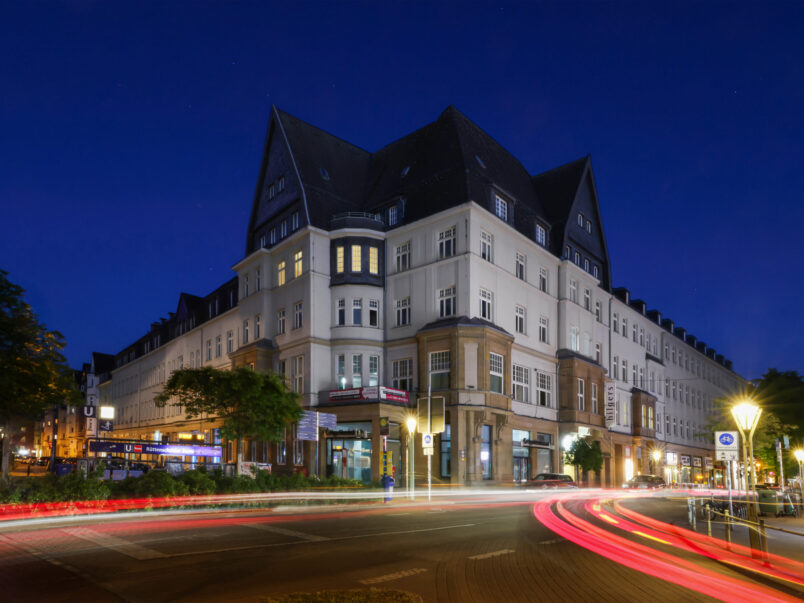
Stevens English Training, the language school with a difference, is a name well known in local business circles. Thanks to the high quality of our general, business and technical English courses, we have gone from strength to strength since our establishment in 1986.
Around the turn of the century we realised that it was time to take a step further by adding German courses to our range of services.
With borders continuously opening to free trade, markets growing together and the increasing mobility of the world’s workforce, it is evident that more and more executives and professionals from abroad are coming to Germany to work and live. Very often they will be bringing their families with them.
Our General German Language Courses
The General German courses are designed for partners and family members of expatriates, who do not need to use German in a work-related context but who will need to use the language in everyday situations. We recommend that the lessons take place at one of our four training centres as this is more conducive to learning than a domestic environment.
Again we recommend a regular training session, for example (2 x 45 minutes per week), however, given that the learners might have a bit more time on their hands they might like to have two or even three such sessions per week. As explained elsewhere clients are encouraged to seek potential learning partners from their circle of family and friends.
The targets and topics of the lessons will depend very much on the learner’s level.
Example A1/A2 topics:
- Introducing yourself and getting to know people
- Describing the daily routine
- Describing an apartment, a house and facilities
- Shopping: vocabulary for food and other goods
- Simple conversations
- Talking about yourself and your life
- Conversations about leisure time and hobbies
- Doctor‘s visits: vocabulary, questions and answers
- At the hotel, in the restaurant
- Invitations: birthdays, Christmas, weddings and other festivities
Our Business German Language Courses
Our Business German courses are planned either as one-to-one training or as closed groups. They can be conducted either at one of our four training centres (Essen, Cologne, Dortmund or Münster) or at the client‘s premises.
Normally the lessons take place in the form of extensive programmes, for example with one double session (2 x 45 minutes) per week, however courses can be far more intensive if wished. In all cases the learner‘s individual interests and scheduling preferences can be taken into account. If requested, special themes can be integrated or trainers with expertise in particular areas may be sent in.
Examples of B2-level topics:
- Improve negotiation skills in German
- Active and effective participation in meetings and the chairing of discussions
- Powerful and persuasive presentations
- Efficient communication on the phone, by letter, email or via social media
- Self confidence in social situations (small talk)
- Improved correctness and accuracy when talking
- Awareness of political, economic, cultural and social matters from the German speaking world